

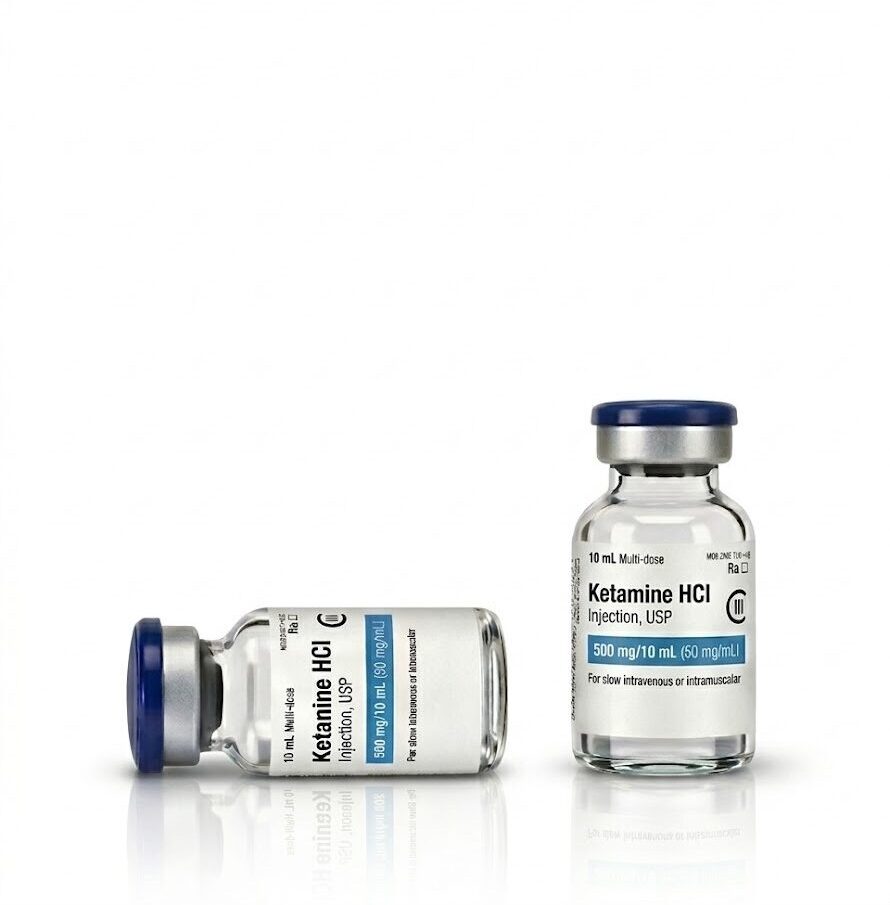


Ketamine HCl Injection
Price range: $104.95 through $5,235.56
Medical-grade Ketamine HCl Injection for professional clinical and hospital use. Effective for depression, anxiety, PTSD, and chronic pain under professional supervision.

Introduction
Ketamine HCl Injection is a rapid-acting general anesthetic characterized by profound analgesia, normal pharyngeal-laryngeal reflexes, and minimal respiratory depression. In modern clinical settings, this NMDA receptor antagonist serves as a cornerstone for both emergency medicine and specialized psychiatric interventions. Licensed practitioners and medical facilities use this agent to induce a state of dissociative anesthesia, in which the patient appears awake but is detached from the environment. Navigating the complexities of medical-grade ketamine requires an advanced understanding of its unique pharmacokinetics and its role in hemodynamically unstable patients.
Key Clinical Takeaways
Induces dissociative anesthesia by selectively interrupting sensory pathways.
Maintains blood pressure and cardiac output, making it ideal for treating hypovolemic shock.
Exhibits potent bronchodilatory effects useful in severe asthmatic patients.
Requires specialized monitoring to manage emergence delirium and sympathetic stimulation.
Serves as a versatile agent for induction, maintenance, and procedural sedation.
What is Ketamine HCl Injection?
Ketamine HCl Injection is a sterile solution containing ketamine hydrochloride, a non-barbiturate anesthetic. Chemically designated as 2-(o-chlorophenyl)-2-(methylamino) cyclohexanone hydrochloride, it functions primarily as a non-competitive antagonist at the N-methyl-D-aspartate (NMDA) receptor complex. Unlike traditional anesthetics, which suppress the central nervous system (CNS) globally, this agent induces functional dissociation between the thalamocortical and limbic systems.
The resulting state is characterized by intense analgesia and amnesia while preserving protective airway reflexes. Because it undergoes extensive hepatic metabolism via CYP3A4, CYP2B6, and CYP2C9, its clearance is highly dependent on liver blood flow. The primary metabolite, norketamine, has approximately one-third the anesthetic potency of the parent compound but contributes to the prolonged analgesic tail observed after administration.

Conditions it Treats: Clinical Indications and Symptoms
This pharmacological agent is indicated as the sole anesthetic for short diagnostic and surgical procedures. It is particularly effective for interventions that do not require skeletal muscle relaxation.
Induction and Maintenance of Anesthesia
It is frequently used to induce anesthesia before the administration of other general anesthetic agents. In pediatric populations or high-risk trauma cases where hypotension is a concern, it serves as a primary induction agent due to its ability to stimulate the sympathetic nervous system.
Procedural Sedation
For painful procedures such as burn debridement, fracture reduction, or skin grafting, the medication provides rapid-onset sedation. It effectively manages the acute pain symptoms associated with these procedures without the significant cardiovascular collapse often seen with propofol or thiopental.
Status Asthmaticus
In intensive care units, it is utilized for patients with severe bronchospasm who are failing conventional therapy. Its sympathomimetic properties cause the release of endogenous catecholamines, leading to smooth muscle relaxation in the airways.
Ketamine HCl Injection
As a gold standard in pre-hospital and emergency medicine, Ketamine HCl Injection is valued for its wide safety margin. The solution is typically provided in concentrations of 10 mg/mL, 50 mg/mL, or 100 mg/mL to accommodate various routes of administration and patient volumes. Its unique ability to provide a “dissociative” state means the eyes may remain open and a slow nystagmic gaze may be present, though the patient remains unresponsive to painful stimuli.
Ketamine HCl Injection Variable Section
The clinical application of this medication varies significantly based on the intended depth of sedation and the specific medical environment. While the IV route is most common for rapid induction, intramuscular (IM) administration is highly effective in uncooperative patients or when venous access is difficult to establish.
Duration of Action of Ketamine HCl Injection
Following intravenous administration, the anesthetic effect occurs within 30 seconds and lasts approximately 5 to 10 minutes. However, the analgesic effects persist much longer. IM administration results in an onset of 3 to 4 minutes, with a clinical duration of 12 to 25 minutes.
Administrative Protocols
Clinicians must differentiate between the needs of a surgical suite and an outpatient psychiatric clinic. For instance, the use of Ketamine HCl Powder in research or compounding differs vastly from the immediate utility of the injectable form in a trauma bay.
The Ketamine HCl Nasal Spray provides an alternative for psychiatric maintenance where injectable titration is unnecessary for chronic management.
Concentration Nuances
Lower concentrations (10 mg/mL) of Ketamine HCl Injection are preferred for titration during continuous infusions, whereas higher concentrations (100 mg/mL) are ideal for IM injections to minimize tissue volume displacement and discomfort.
Factors That Influence Ketamine HCl Injection Variation
The pharmacological response to the drug is not uniform and is influenced by several patient-specific variables:
-
Hemodynamic Status: In patients with depleted catecholamine stores (e.g., chronic shock), the expected increase in blood pressure may not occur, and a myocardial depressant effect may unmask.
-
Concurrent Medications: Co-administration with benzodiazepines can prolong the half-life and reduce the incidence of emergence reactions.
-
Age: Pediatric patients generally require higher weight-based doses due to faster metabolic clearance, while geriatric patients may experience prolonged recovery times.
-
Physiological pH: Acidosis can alter the drug’s protein binding and distribution, potentially intensifying its effects.
-
Neurological Profile: Patients with pre-existing elevated intracranial pressure (ICP) require cautious dosing, as the drug can increase cerebral blood flow and oxygen consumption.
Clinical Benefits and Therapeutic Uses
1. Hemodynamic Stability in Trauma
Unlike most induction agents that cause vasodilation, this medication increases heart rate, cardiac output, and mean arterial pressure. This makes it the preferred choice for patients suffering from hemorrhagic shock.
2. Preservation of Spontaneous Respiration
It maintains the drive to breathe and keeps the airway patent by preserving pharyngeal reflexes. This reduces the immediate necessity for endotracheal intubation in certain short-term procedural settings.
3. Potent Analgesic Properties
Even at sub-anesthetic doses, it provides significant pain relief. This “opioid-sparing” effect is crucial in managing chronic pain syndromes and reducing the risks associated with high-dose narcotics.
4. Rapid Treatment for Refractory Depression
Emerging clinical data highlight its role in treating Major Depressive Disorder (MDD) and suicidal ideation. While nasal options exist, the injectable form is used in controlled infusion settings for rapid stabilization.
5. Bronchodilation in Critical Care
Inhibiting catecholamine reuptake facilitates relaxation of bronchial smooth muscle. This is a life-saving benefit for patients in respiratory distress due to reactive airway disease.
6. Minimal Histamine Release
The drug does not trigger a significant histamine response, reducing the risk of anaphylactoid reactions compared to other anesthetic classes.

Comparative Analysis of Ketamine Formulations
| Feature | Ketamine HCl Injection | Ketamine HCl Powder | Ketamine HCl Nasal Spray |
| Primary Use | Acute Anesthesia / Induction | Compounding / Research | Psychiatric Maintenance |
| Onset | 30 Seconds (IV) | Variable | 5–15 Minutes |
| Medical Setting | Hospital / ER / Clinic | Laboratory / Pharmacy | Outpatient / Home |
| Bioavailability | 100% (IV) | N/A (Pre-processing) | 25% – 50% |
| Control | High / Precise Titration | Medium | Lower |
Safety and Side Effects: Clinical Considerations
While Ketamine HCl Injection is remarkably safe when administered by professionals, it is associated with specific adverse reactions that require proactive management. According to the FDA, the most notable side effect is the emergence phenomenon, which occurs in approximately 12% of patients. This may include vivid dreams, hallucinations, or confusion during the recovery phase.
Cardiovascular effects include transient increases in blood pressure and heart rate. While beneficial in shock, these effects can be deleterious in patients with uncontrolled hypertension or heart failure. Respiratory side effects are rare, though rapid IV bolus administration can occasionally cause transient respiratory depression or apnea.
Gastrointestinal symptoms such as nausea and vomiting are common postoperatively. To mitigate these risks, clinicians often administer antiemetics or pre-treat with midazolam to smooth the emergence transition. Detailed pharmacovigilance reports on PubMed suggest that monitoring for laryngospasm is also essential, especially in pediatric populations with active upper respiratory infections.
Who Should Avoid It: Contraindications
There are specific clinical scenarios where the use of this anesthetic is strictly contraindicated:
-
Significant Hypertension: Patients in whom a rise in blood pressure would constitute a serious hazard (e.g., recent myocardial infarction).
-
Hypersensitivity: Known allergy to ketamine or any of the preservative components (e.g., benzethonium chloride).
-
Elevated Intracranial Pressure: Generally avoided in patients with increased ICP or globe injuries where intraocular pressure must be strictly maintained.
-
Eclampsia or Pre-eclampsia: Due to the risk of exacerbating hypertension in pregnancy.
-
Schizophrenia: May exacerbate psychotic symptoms or trigger acute episodes in patients with a history of psychosis.
Summary of Ketamine HCl Injection
The utility of Ketamine HCl Injection in modern medicine cannot be overstated. From the battlefield to the psychiatric clinic, its ability to provide rapid, safe, and effective anesthesia while maintaining cardiovascular stability makes it an indispensable tool for licensed clinicians. By understanding the nuances of its administration and the physiological factors that influence its efficacy, medical professionals can optimize patient outcomes across a variety of critical care scenarios. As research continues to expand into its neuroplastic effects, the role of Ketamine HCl Injection will likely evolve from a traditional anesthetic to a primary intervention for complex neurological and psychological disorders.
Frequently Asked Questions
What is the standard concentration for Ketamine HCl Injection?
The medication is most commonly supplied in multidose vials of 10 mg/mL, 50 mg/mL, and 100 mg/mL concentrations. The choice of concentration depends on the route of administration and the required volume for the specific clinical procedure.
How does Ketamine HCl Injection affect the respiratory system?
Unlike opioids or benzodiazepines, it typically preserves spontaneous respiration and airway reflexes. However, rapid intravenous injection can cause a brief period of apnea, requiring advanced airway management equipment.
Can this medication be used for chronic pain management?
Yes, sub-anesthetic infusions are increasingly used to treat refractory chronic pain and neuropathic conditions. This application leverages the drug’s NMDA antagonism to reduce central sensitization.
What is “emergence delirium” and how is it managed?
Emergence delirium refers to the hallucinations or confusion patients may experience as the anesthetic wears off. It is professionally managed by providing a quiet recovery environment and often by administering low-dose benzodiazepines.
Is Ketamine HCl Injection safe for pediatric patients?
It is widely used in pediatric anesthesia for short procedures and induction. Children often tolerate the drug better than adults, with a lower incidence of emergence reactions, though they still require careful monitoring of vital signs, as outlined by Mayo Clinic.
Medical Disclaimer:
This content is for informational purposes only and is intended for licensed medical professionals. It does not constitute medical advice, diagnosis, or treatment. Ketamine is a Schedule III controlled substance and must only be administered by qualified healthcare providers in a clinical setting equipped with appropriate monitoring and resuscitative equipment. Refer to the full prescribing information and CDC guidelines (https://www.cdc.gov/) for institutional protocols.
Related products
Ketamine HCl Powder
High-purity Ketamine HCl Powder (≥99%) designed for licensed research institutions and pharmaceutical compounding applications. This crystalline NMDA receptor antagonist provides exceptional stability, precise formulation control, and reliable performance for advanced clinical studies and specialized preparations.

Robert Jenkins –
Very professional packaging and labeling. Everything arrived clean and secure, and delivery was faster than expected. The ordering process was smooth and reliable. – Robert Jenkins, Florida, USA
Stefan Müller –
Delivery was secure and on time. The packaging looked medical grade and everything arrived intact. Very satisfied with the service provided. – Stefan Müller, Hamburg, Germany
Marco Rossi –
High-quality packaging and reliable delivery. The product presentation looked professional and well handled. Customer service was responsive and helpful. – Marco Rossi, Milan, Italy
Christopher Lewis –
Excellent experience overall. The product arrived well protected and matched the description perfectly. Shipping updates were accurate and helpful. – Christopher Lewis, New York, USA
Javier Martinez –
Very pleased with this purchase. The item arrived in perfect condition and shipping updates were consistent throughout the process. – Javier Martinez, Madrid, Spain