
Knowledge Center
Ketamine Bladder
Introduction
The rapid evolution of dissociative anesthetics in mental health care has brought significant relief to patients struggling with treatment-resistant conditions. However, as clinical availability increases, so does the need for comprehensive education regarding potential side effects. One of the most discussed urological concerns is the development of a ketamine bladder, a condition clinically recognized as ketamine-induced cystitis (KIC). While this condition is most frequently associated with long-term, high-dose non-medical misuse, it remains a critical point of focus for medical professionals to ensure that therapeutic applications remain safe, effective, and sustainable for the renal system.

Understanding the relationship between the urinary tract and dissociative medications allows patients to engage in therapy with confidence. In a supervised medical environment, the risk of a ketamine bladder is significantly mitigated through precise dosing, pharmaceutical purity, and proactive patient monitoring. By prioritizing evidence-based protocols, clinicians can provide the profound benefits of these therapies while safeguarding the physical health of the patient’s bladder and kidneys.
Key Takeaways: Understanding Renal Safety in Therapy
- Clinical vs. Recreational: A ketamine bladder is primarily a risk factor in chronic, high-dose misuse rather than controlled clinical infusions.
- Early Symptoms: Increased urinary frequency, urgency, and painful urination (dysuria) are the primary early warning signs.
- Reversibility: In many clinical cases, early-stage irritation is fully reversible upon the cessation of the medication.
- Hydration is Vital: Maintaining high fluid intake helps dilute metabolites that could otherwise irritate the urothelial lining.
- Professional Oversight: Licensed clinics use Medical-Grade Ketamine to ensure patient safety and minimize adverse renal events.
Summary of Ketamine-Induced Cystitis
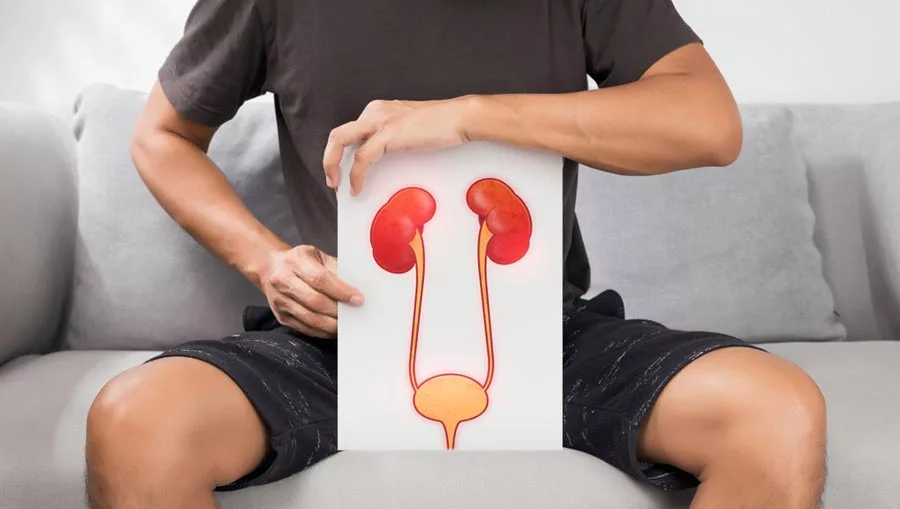
The term ketamine bladder refers to an inflammatory condition of the urinary tract characterized by damage to the bladder wall. Clinically, this occurs when the metabolic byproducts of the drug, specifically norketamine, cause irritation to the protective glycosaminoglycan (GAG) layer of the bladder. In a medical setting, the incidence of these symptoms is exceptionally low because therapeutic doses are sub-anesthetic and administered at controlled intervals. When patients are monitored by healthcare professionals, any signs of a ketamine bladder can be identified and managed long before permanent damage occurs.
The Pathophysiology of the Ketamine Bladder
To understand the origins of a ketamine bladder, one must look at how the body processes the medication. After administration, the substance undergoes extensive hepatic metabolism, where it is converted into various metabolites. These compounds are then filtered by the kidneys and stored in the bladder before excretion. Because the bladder serves as a reservoir, it is the primary organ exposed to high concentrations of these chemicals for extended periods.

If the concentration is high enough or exposure is frequent enough, the metabolites can trigger an inflammatory response. This inflammation can lead to “denudation” of the bladder lining, where the protective inner layer is stripped away. According to the National Institutes of Health (NIH), this process can eventually result in fibrosis, leading to a shrunken, non-compliant bladder. This is why clinics prioritizing patient safety often utilize a Ketamine HCl Injection to maintain precise control over the total amount of substance introduced into the patient’s system.
The Role of Norketamine
Norketamine is the primary active metabolite responsible for many of the drug’s therapeutic effects, but it is also the primary irritant associated with a ketamine bladder. In a clinical setting, the intervals between treatments allow the bladder lining to recover and clear these metabolites. However, in non-medical scenarios where the drug is used daily, the bladder is never given the opportunity to heal, leading to a cumulative damage effect.
Identifying the Symptoms of Ketamine-Induced Cystitis
Patients undergoing therapy should be educated on the specific sensations that might indicate the onset of a ketamine bladder. While rare in clinical settings, early detection is the best way to prevent progression.
Urinary Frequency and Urgency
The most common early sign of a ketamine bladder is a dramatic increase in the need to void. Patients may find themselves needing to use the bathroom every 20 to 30 minutes, even throughout the night (nocturia). This urgency can be distressing and is often the first symptom that prompts a medical consultation.
Dysuria and Pelvic Pain
Painful urination, often described as a “burning” or “stinging” sensation, is another hallmark of a ketamine bladder. This pain may be localized to the urethra or felt more broadly in the pelvic region. In more advanced stages, patients may experience suprapubic pain—a dull, constant ache located just above the pubic bone where the bladder sits.
Hematuria (Blood in Urine)

In severe cases of a ketamine bladder, the inflammatory response is so significant that it causes bleeding from the bladder wall. Hematuria can be microscopic (only visible under a microscope) or macroscopic (visible to the naked eye, appearing as pink or red-tinted urine). The presence of blood is a serious clinical sign that requires immediate urological evaluation.
Comparison of Clinical Dosing vs. High-Dose Misuse
| Factor | Clinical Therapy | Chronic Misuse |
| Dose Amount | Low (Sub-anesthetic) | High (Often 10x-100x clinical dose) |
| Frequency | Periodic (e.g., Weekly or Monthly) | Chronic (Daily) |
| Purity | Pharmaceutical Grade | Unknown/Adulterated |
| Risk of Ketamine Bladder | Minimal | Significant |
| Medical Supervision | Constant | None |
For those receiving treatment via a Clinical Ketamine HCl Nasal Spray, the delivery is specifically calibrated to reach therapeutic levels without overwhelming the renal system. This controlled approach is the primary reason why clinical patients rarely develop the complications seen in the non-medical community.
Diagnostic Procedures for Bladder Irritation
When a clinician suspects the early stages of a ketamine bladder, several diagnostic steps are taken to confirm the condition and rule out other issues like bacterial infections or interstitial cystitis.
- Urinalysis and Culture: This is the first step to ensure the symptoms are not caused by a standard urinary tract infection (UTI).
- Cystoscopy: A urologist may use a small camera to inspect the bladder lining. A ketamine bladder often shows “glomerulations” (tiny hemorrhages) or general redness and thinning of the tissue.
- Urodynamic Studies: These tests measure how much urine the bladder can hold and the pressure within the organ. A shrunken ketamine bladder will show significantly reduced capacity and high internal pressure.
- Renal Ultrasound: This is performed to ensure the kidneys are not being impacted by “backflow” from a malfunctioning bladder.
The Mayo Clinic emphasizes that early diagnosis is critical. If caught early, simply stopping the medication and providing supportive care can allow the bladder to repair its GAG layer and regain normal function.
Why Supervised Clinical Use is Essential
The emergence of the ketamine bladder as a recognized medical condition has highlighted the dangers of self-administration. In a clinical setting, every aspect of the treatment is designed to protect the patient. Using Medical Ketamine HCl Powder only for compounding within regulated pharmacies ensures that no toxic adulterants are present. These adulterants, often found in street-level substances, can exacerbate the inflammatory response in the bladder.
Furthermore, medical providers monitor the cumulative dose a patient receives over time. If a patient shows any vulnerability to renal irritation, the clinician can adjust the treatment plan, extend the time between sessions, or switch to a different therapeutic modality. This “safety-first” approach is impossible without professional oversight.
Treatment and Recovery for a Ketamine Bladder
If a patient develops signs of a ketamine bladder, the treatment plan is centered on two goals: stopping the damage and managing the symptoms.
Immediate Cessation
The most effective “cure” for a ketamine bladder is the total discontinuation of the drug. For medical patients, this is done in consultation with their entire care team. In the early stages of the disease, the bladder has a remarkable ability to heal itself once the irritating metabolites are removed from the urine.
Pharmacological Support
Urologists may prescribe medications to help protect and rebuild the bladder wall. Drugs like Pentosan Polysulfate Sodium (Elmiron) are sometimes used to mimic the protective GAG layer. Additionally, anticholinergic medications may be used to reduce the “urge” and “frequency” symptoms by relaxing the bladder muscles.
Bladder Instillations
In some instances, a “bladder cocktail” of lidocaine, heparin, and sodium bicarbonate is infused directly into the bladder via a catheter. This provides direct relief to the inflamed tissue and helps jumpstart the healing process in a patient suffering from a ketamine bladder.
Long-Term Outlook and Prevention
Can a ketamine bladder be prevented entirely? For clinical patients, the answer is largely “yes.” By following medical guidance and maintaining open communication with providers, the risk remains a manageable variable.
Hydration and Nutrition
One of the simplest ways to prevent a ketamine bladder is to keep the urine as dilute as possible. Drinking plenty of water before and after a session helps wash metabolites out of the bladder quickly. Some research suggests that antioxidants found in green tea (EGCG) may provide a protective effect against ketamine-induced urothelial damage, though patients should always discuss supplements with their doctor first.
Routine Monitoring
Clinics that specialize in long-term ketamine therapy often include periodic urological screenings or symptom questionnaires as part of their standard care. This ensures that the health of the ketamine bladder is never overlooked in favor of mental health outcomes.
The Impact on Mental Health and Pain Management
The concern over a ketamine bladder should not deter patients from seeking treatment for severe depression or chronic pain, provided they are doing so under professional care. The benefits of these therapies often far outweigh the risks when those risks are managed correctly. According to the FDA, while urological adverse events are listed on the labeling for ketamine products, they are classified as risks that must be weighed by a medical professional.
When a patient is treated in a legitimate facility, the focus is on a holistic recovery. This means that while the brain is being “rewired” for better mood and less pain, the body is being protected from systemic side effects. The ketamine bladder is a known risk, but in the hands of experts, it is a risk that can be successfully navigated.
FAQ: Common Questions About the Ketamine Bladder
Can a ketamine bladder cause permanent damage?
If left untreated and if the individual continues high-dose use, yes, a ketamine bladder can lead to permanent scarring, kidney failure, and the need for surgical removal of the bladder. However, this is extremely rare in clinical therapy.
How much ketamine causes bladder damage?
There is no specific “safe” dose, as every individual’s metabolism is different. However, damage is most commonly seen in those using grams of the substance daily. Clinical doses are a fraction of this amount.
Is ketamine bladder pain different from a UTI?
The pain can feel very similar to a UTI, but a ketamine bladder will not show a bacterial infection in a urine culture. If you have “UTI symptoms” that do not respond to antibiotics, it is important to investigate other causes.
What should I do if I have symptoms of a ketamine bladder?
The first step is to inform your prescribing physician immediately. They will likely refer you to a urologist for an evaluation and may pause your treatment to protect your renal health.
Are nasal sprays safer for the bladder than infusions?
Because the total dose used in nasal sprays like esketamine is often lower and administered less frequently than pain infusions, the localized risk to a ketamine bladder may be lower, though vigilance is still required for all forms of the medication.
Summary of Clinical Best Practices
In conclusion, the ketamine bladder is a serious condition, but one that is largely preventable through education and clinical rigor. For patients seeking relief through dissociative therapies, the key to safety lies in professional supervision. By utilizing high-purity medications, adhering to strict dosing schedules, and maintaining a high level of hydration, the risk of developing a ketamine bladder remains an outlier in a clinical setting.
Providers continue to research the best ways to protect the urinary tract while delivering life-altering mental health care. As our understanding of the ketamine bladder grows, so too does our ability to refine these protocols, ensuring that the bladder and kidneys are as well-cared for as the mind. Always remember that the path to wellness should be a supervised one, where every potential side effect is anticipated and managed by a dedicated medical team.
Medical Disclaimer
This content is for informational purposes only and does not constitute medical advice. A ketamine bladder or ketamine-induced cystitis is a medical condition that must be diagnosed and managed by a licensed professional. Ketamine treatments should only be administered under the strict supervision of a qualified healthcare provider in a clinical environment. Always consult with a qualified medical professional before making any decisions regarding your health or treatment.
Ketamine Dosage Form